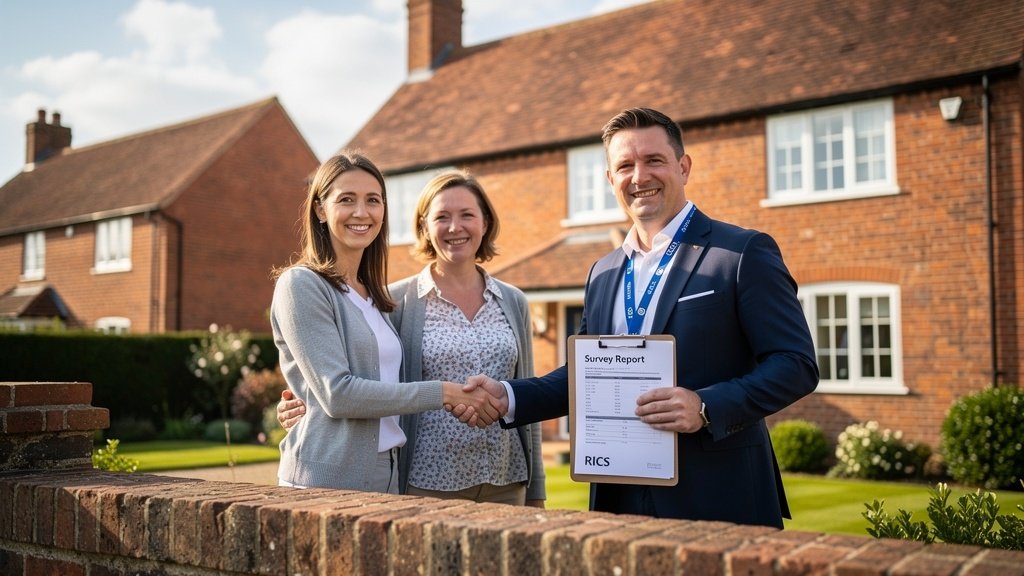
Choosing a Basingstoke surveyor sounds straightforward — search online, compare prices, book the cheapest. But a survey is only as good as the person carrying it out. The wrong choice can leave you with a superficial report that misses serious defects, costing you thousands in unexpected repairs after completion. This guide cuts through the noise and gives you exactly what to look for — and what to watch out for.
I've been a surveyor in Basingstoke for over 12 years. In that time, I've seen clients come to us after receiving reports from other firms that simply didn't do justice to the property. Reports that listed cosmetic observations but missed structural movement. Reports delivered with tick-boxes and traffic lights but no actual explanation of what the defects meant or what should be done about them. A survey is one of the most important professional services you'll commission in your property purchase — it deserves the same scrutiny you'd apply to choosing a solicitor or an architect.
Why Choosing the Right Surveyor Really Matters
Property surveys exist for one purpose: to protect you. You're spending hundreds of thousands of pounds on a property you've probably visited twice, for 30–60 minutes each time. A skilled surveyor spends three to five hours carrying out a methodical, expert inspection of every accessible element — and then translates that into clear, actionable advice.
The difference between a good and a poor survey can be enormous. A good Level 3 Building Survey on a Victorian terrace in Basingstoke might identify £15,000 of roof repairs, active rising damp, and inadequate electrical installation — giving you the option to renegotiate the price or walk away. A poor survey on the same property might give you a C3 rating on the roof, a note that "damp meter readings were elevated" and a recommendation to "seek further specialist advice" — technically covering the surveyor legally while leaving you no better informed than before.
10 Questions to Ask Before You Book a Surveyor
1. Are You RICS Qualified?
This should be your first filter. RICS (Royal Institution of Chartered Surveyors) is the UK's leading professional body for property. RICS members must meet rigorous education and experience requirements, adhere to a professional code of conduct, and carry professional indemnity insurance. Look for the post-nominals MRICS (Member) or FRICS (Fellow) after the surveyor's name.
Other respected professional bodies include CIOB (Chartered Institute of Building) and RPSA (Residential Property Surveyors Association). However, if you're commissioning an RICS survey — Level 2 or Level 3 — the surveyor must be RICS-qualified. Don't let anyone tell you otherwise.
2. Do You Know Basingstoke and North Hampshire Specifically?
Local knowledge genuinely matters in surveying. A surveyor who knows Basingstoke understands the local housing stock — the Victorian terraces of Fairfields, the 1960s estates of Popley, the new builds of Hatch Warren, the clay soil conditions of the area and the implications for foundations. They know which local authorities cover the area, what permitted development rights apply, and the typical condition issues for properties of different ages and types in this part of Hampshire.
A national online firm booking your survey with a regional subcontractor who has never worked in Hampshire is not equivalent to a specialist local practice. Ask specifically: how many surveys have you carried out in Basingstoke in the last 12 months?
3. Will You Be the Person Carrying Out the Survey?
Some firms take your booking, confirm a price, and then dispatch whichever surveyor is available in the region. You may never speak to that surveyor before or after the inspection. Ask specifically whether the person you're speaking to will personally carry out the inspection and write the report.
At a minimum, you should know the name and qualifications of the surveyor who will inspect your property before you book. If a firm is cagey about this, that's a red flag.
4. Can I Talk to You After the Report Is Delivered?
A good building survey report is detailed and inevitably raises questions. "What does Category 3 mean here — do I need to act immediately?" "How urgent is the roof issue — can I negotiate on price?" "Should I pull out of the purchase?" These are questions you should be able to ask your surveyor directly, by phone, after you've read the report.
Many online firms don't offer any post-report consultation. You get a PDF, and you're on your own. Always confirm in advance whether the surveyor is available for a call to discuss the findings.
5. What Does the Report Look Like?
Ask to see an example report (with client details removed). A good Level 3 Building Survey report should be a substantial document — typically 40–80 pages for an average property. It should include photographs of defects, clear descriptions of findings, explanations of why defects matter, and specific recommendations for action. A report that's 15 pages of traffic lights with minimal narrative is simply not adequate for a complex property.
6. What Is Included in the Inspection?
Clarify exactly what the surveyor will and won't inspect. For a Level 3 Building Survey, you should expect inspection of: all accessible rooms and areas including loft space and subfloor void where accessible; all external elements including roof (from ground level with binoculars or from adjacent roofs where safe), outbuildings, drainage gullies and grounds; services including heating, electrics and plumbing (visual inspection, not testing); and any outbuildings.
Be wary of surveyors who caveat heavily before they've even started — "we don't inspect X, we don't comment on Y." While some limitations are normal, excessive exclusions suggest a surveyor who wants to limit their liability rather than give you a thorough service.
7. What Is Your Turnaround Time?
In a competitive property market, time matters. If a vendor has given you a 10-working-day deadline to exchange, you need a survey report within that window. Ask specifically: how quickly can you carry out the inspection, and how quickly will the written report be delivered after that? Typical turnaround for a quality surveyor should be inspection within 3–5 working days and report within 2–3 working days of inspection.
Be cautious of very long turnaround times — they may indicate the firm is overbooked and your report will receive less care and attention. Also be cautious of unrealistically fast turnaround promises (same-day reports), which may indicate template-heavy, superficial reports.
8. What Professional Indemnity Insurance Do You Hold?
Professional indemnity (PI) insurance protects you if the surveyor makes a negligent error that costs you money. RICS members are required to hold PI insurance, but cover limits vary. For high-value properties, it's reasonable to ask about the coverage level. A surveyor with minimal PI cover on a £500,000 property leaves you exposed if they miss a significant defect.
9. What Is Your Complaints Process?
No surveyor is infallible, and professional disputes do occasionally arise. RICS members must have a formal complaints process and are subject to RICS regulation if matters cannot be resolved directly. Ask how complaints are handled and what redress scheme the surveyor belongs to. The ability to escalate to RICS if necessary is an important consumer protection.
10. Is Your Price a Fair Reflection of the Service?
Price is a legitimate consideration, but it should never be the primary driver. A Level 3 Building Survey in Basingstoke should typically cost £450–£800 for an average property, depending on size. If a quote is significantly below this range, ask why. Very low prices usually mean either a junior surveyor, a reduced-scope inspection, or a template report that's assembled quickly rather than written specifically for your property.
By the same token, very high prices don't automatically mean better service. Get two or three quotes, compare the responses to the questions above, and make your decision based on confidence and fit rather than price alone.
Red Flags That Should Make You Look Elsewhere
Watch Out For These Warning Signs
- Firm won't tell you who will carry out the inspection until after booking
- No post-report phone consultation offered as standard
- Example report is mostly traffic lights with minimal written commentary
- Price is significantly below the market rate for the service described
- Surveyor cannot confirm local Basingstoke experience when asked directly
- Heavy use of caveats and disclaimers in the initial conversation
- No professional body membership (RICS, CIOB or RPSA)
- Pressure to book immediately without time to consider your options
- Turnaround promises that seem unrealistically fast
The Difference Between a Surveyor and a Valuer
This is worth clarifying because the terms are often confused. Your mortgage lender will instruct a valuation — carried out by a valuer, sometimes called a lender's valuation or mortgage valuation. This is not a survey. Its sole purpose is to confirm to the lender that the property represents adequate security for the loan. It does not assess structural condition, does not describe defects, and is not made available to you in any meaningful way.
A survey — whether a RICS Level 2 Homebuyer Report or Level 3 Building Survey — is commissioned by you, for you, to give you an independent expert assessment of the property's condition before you commit to buying it. These are entirely different services. Never rely on a mortgage valuation as a substitute for a proper survey.
Why We Think Local Always Wins for Basingstoke Surveys
National online survey platforms have grown in recent years, promising convenience and competitive pricing. Our honest view is that for a standard property in good condition, you might get an adequate service from some of these platforms. But for a complex property — a Victorian terrace, an older detached house, anything with evident concerns — local expertise is significantly better.
We know Basingstoke. We know Old Basing and its chalk foundations. We know which parts of town have higher clay content and what that means for foundation movement. We know the local planning authority's approach to permitted development and conservation areas. We know the typical age and condition of properties in different streets. That knowledge colours every inspection we carry out and makes our reports more useful to you.
It also means you can meet us. You can ask questions. You can have a genuine conversation about your property and your specific concerns, rather than sending an email into a call centre and hoping for a useful response. Good surveying is a professional relationship, not a transaction.
How to Book a Survey With Us
Getting a quote is straightforward. Contact us with the property address, the type of survey you're considering, and any specific concerns you have about the property. We'll come back to you promptly with a fixed-price quote, confirm which surveyor will carry out the inspection, and agree a timescale that works with your conveyancing timeline.
We offer RICS Level 2 Homebuyer Reports from £350, RICS Level 3 Building Surveys from £450, new build snagging surveys from £250, and RICS valuations from £300. All surveys include a post-report phone consultation with your surveyor as standard.
Frequently Asked Questions About Choosing a Surveyor
Can I use the surveyor recommended by my estate agent?
You can, but be aware that some estate agents have referral arrangements with surveyors and may receive a fee for recommending them. This doesn't automatically mean the surveyor is poor — but it's worth doing your own due diligence rather than simply accepting the recommendation. The surveyor works for you, not the agent.
Should I be present during the survey?
You're entitled to be present, and some buyers find it useful to walk around with the surveyor and ask questions. However, it's equally common for buyers not to attend — the surveyor doesn't need you there to carry out a thorough inspection. If you do attend, respect the surveyor's focus during the inspection and save questions for after. Many surveyors prefer to discuss findings at the end of the inspection or by phone once the report is written.
Can I use the same surveyor as the person selling the property used?
No — this would be a clear conflict of interest. Your surveyor must be entirely independent of the vendor and the vendor's agents. If a vendor offers to share their own survey, you can read it for background information, but you should always commission your own independent survey. You have no legal recourse against a surveyor who was not instructed by you.
What if the survey reveals serious problems — what happens next?
A surveyor's job is to tell you what's there — the decision about what to do is yours. If the survey reveals serious issues, you have several options: renegotiate the price with the vendor to reflect the cost of remediation; request that the vendor completes specified works before exchange; obtain specialist contractor quotes and use these to inform further negotiation; or withdraw from the purchase. Our post-report consultation will help you think through your options clearly.
How long is a building survey valid for?
A building survey reflects the condition of the property at the time of inspection. It's technically valid indefinitely, but in practice, if significant time passes between survey and completion — say, more than six months — it may be worth a re-inspection, particularly if the property has been empty or if there have been weather events that could have caused new damage. Most completions happen within weeks of the survey, so this is rarely an issue.
Ready to Book Your Basingstoke Survey?
Speak directly with one of our RICS surveyors. No call centres, no subcontractors — just local experts who know Basingstoke inside out.
Get a Free Quote Meet Our Team