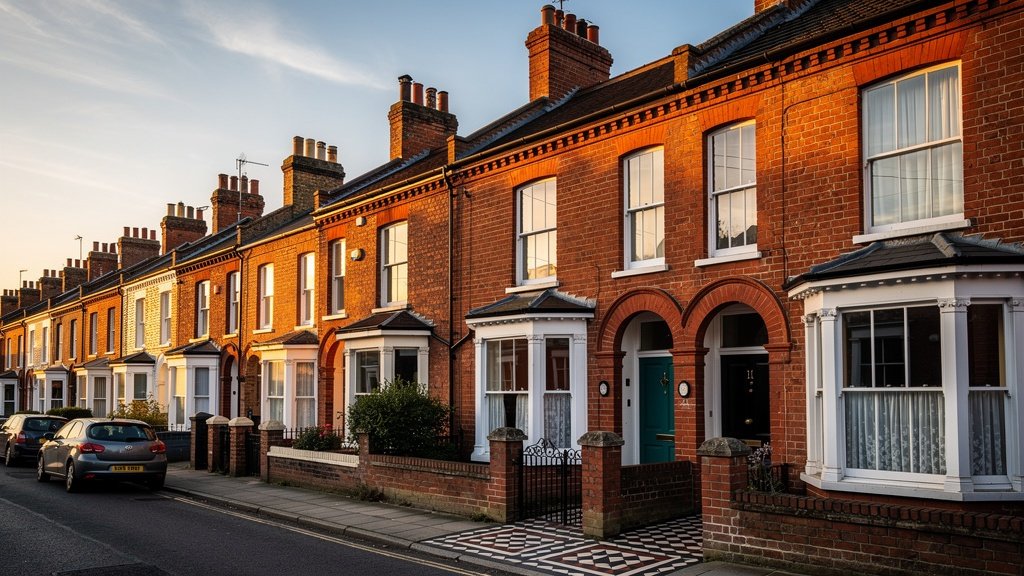
Basingstoke has a rich stock of Victorian and Edwardian housing — from terraced streets near the town centre to semi-detached villas in areas like Fairfields and South Ham. These homes have real character, often with high ceilings, generous room sizes and architectural detail you simply won't find in a modern build. But they also come with a very specific set of survey challenges that every buyer should understand before committing.
As a Basingstoke surveyor who has inspected hundreds of period properties across Hampshire, I'd say that Victorian and Edwardian homes consistently produce the most detailed survey reports. That isn't necessarily because they're in poor condition — many have been beautifully maintained — but because there's simply more to assess. The building materials, construction methods and services are all older, and age brings complexity.
This guide covers what our building surveyors specifically look for when assessing a Victorian or Edwardian property, the defects we find most frequently, and how to weigh up whether the charm is worth the potential cost.
Why Victorian and Edwardian Homes Are Different to Survey
Properties built between roughly 1837 and 1914 were constructed using methods and materials that differ significantly from modern building practice. There was no building control as we know it today, no standardised insulation requirements, and no cavity wall construction in most cases. These homes were built using solid brick walls, lime mortar, timber floors and slate or clay tile roofs — all of which have specific performance characteristics and failure modes that a good Basingstoke surveyor needs to understand well.
The other key difference is age. A Victorian terrace built in 1890 is now 135 years old. Even a well-maintained property of that age will have components approaching or past the end of their useful life. The roof timbers, the drainage, the plaster, the windows — all of these need careful assessment. And unlike a new build where a defect is an exception, in a period property a certain level of maintenance backlog is expected. The skill of the surveyor is distinguishing between normal wear and serious defect.
The Most Common Defects We Find in Period Basingstoke Properties
1. Rising and Penetrating Damp
Damp is probably the single most common finding in Victorian properties across Basingstoke. There are two distinct types, and they're often confused.
Rising damp occurs when ground moisture travels upward through a solid brick wall by capillary action. Victorian properties were built before damp-proof courses (DPCs) were standard, or with early DPCs made of slate or bitumen that have since deteriorated. Signs include tide marks on lower walls, salt crystallisation (efflorescence), peeling plaster and a musty smell at ground floor level. It's worth noting that genuine rising damp is often over-diagnosed — many cases are actually caused by bridged DPCs, defective gutters or ground levels raised above the original wall line.
Penetrating damp enters from outside — through failed pointing, cracked render, defective window surrounds or roof defects. Because Victorian homes have solid walls rather than cavities, any water that gets into the outer face of the wall can travel all the way through to the internal plaster. We check external pointing carefully on all period property surveys, as failed lime mortar is extremely common and easily missed on a casual viewing.
Our detailed guide to damp in Hampshire homes covers both types in depth and explains how to tell genuine damp from surface condensation.
2. Structural Movement and Settlement
Some degree of movement is normal and expected in any Victorian property — the buildings have simply had 100+ years to settle. What matters is distinguishing between historic movement that has stabilised and active, ongoing movement that could indicate a structural problem.
We look for cracking patterns in walls, particularly around window and door openings where lintels may have deteriorated. We check whether cracks taper (suggesting rotation or settlement) or are parallel (suggesting direct structural load). We note whether cracks are fresh (sharp edges, clean faces) or old (rounded edges, dirty faces, painted over).
In Basingstoke and North Hampshire, clay soils are common. Clay is susceptible to seasonal shrinkage and swelling, which can cause shallow foundations — as found in many Victorian properties — to experience cyclical movement. Large trees near older properties are a particular concern. Our structural cracks guide explains what different crack patterns mean and when to be concerned.
3. Roof Condition and Timbers
Victorian roofs are typically of cut-rafter construction — each timber individually cut and fitted by a carpenter on site, rather than using modern manufactured trussed rafters. This construction is actually very robust and repairable. The challenge is age.
Common roof findings in period properties include: failed or slipped plain clay tiles; cracked or delaminating slates; failed ridge and hip tile bedding mortar; deteriorated lead flashings to chimneys and dormers; corroded iron fixings causing tiles to slip; and timber decay or woodworm in loft spaces, particularly where there has been any water ingress.
Chimney stacks are almost universally in need of some attention on Victorian properties. The exposed position and age of the brickwork and pointing means that maintenance is an ongoing requirement. Failed flaunching (the mortar cap at the top of the stack) is among the most common defects we record.
4. Timber Floors and Subfloor Void
Ground floor rooms in Victorian and Edwardian properties typically have suspended timber floors — boards laid over joists, with a ventilated void beneath. This construction requires adequate subfloor ventilation to prevent moisture build-up and the rot and woodworm that follows. Air bricks in external walls provide this ventilation, but they frequently become blocked with debris, soil or render over the years.
Blocked air bricks are one of the most consistently under-reported findings in our experience. The consequences — wet rot, dry rot, and woodworm — can be extremely expensive to remedy. On every period property survey we carry out across Basingstoke, we check all visible air bricks and assess the subfloor void where accessible.
5. Original Single-Glazed Sash Windows
Original sash windows are a beautiful feature of period properties and, in good condition, are actually quite thermally efficient once properly draught-proofed. The problem is that many have been poorly maintained — painted shut, with broken sash cords, decayed timber sills or failed putty glazing. Replacing all the windows in a Victorian terrace with heritage-style double-glazed sashes is a significant cost, often £15,000–£25,000 or more depending on size.
We assess sash windows carefully: the condition of the timber, the integrity of the glazing, whether the windows open and close correctly, and the condition of the sills and surrounds. In conservation areas — of which Basingstoke has several — replacement windows will need to match the original style, which adds further cost.
6. Electrics and Plumbing
Building services in Victorian and Edwardian properties have almost certainly been updated at least once since original installation, but the quality and completeness of that updating varies enormously. We recommend that buyers of any period property commission an EICR (Electrical Installation Condition Report) from a qualified electrician. Signs of very old or inadequate electrical installation include round-pin sockets, rubber-insulated wiring, lack of earthing, no RCD protection, and consumer units that haven't been updated in decades.
Lead pipework is still found in some older properties — particularly in the cold water supply where lead pipes from the street mains connection were standard until relatively recently. If lead pipework is identified, replacement is strongly recommended on health grounds. Cast iron drainage is common and functions well when intact, but is vulnerable to cracking with age or ground movement.
Which Survey Do You Need for a Victorian or Edwardian Property?
This is a question we're asked often, and our answer is consistent: for any property built before 1930, we recommend a RICS Level 3 Building Survey (previously called a Full Structural Survey) as the minimum appropriate level of inspection.
A RICS Level 2 Homebuyer Report is designed for properties in reasonable condition with no unusual features. A 130-year-old solid-wall property with original roof timbers and a history of patch repairs does not meet that description. The Level 3 Building Survey gives you:
- A thorough inspection of all accessible areas including roof void, subfloor void, and all outbuildings
- Assessment of the construction type and materials specific to the period
- Detailed descriptions of all defects found, not just a traffic-light rating
- Advice on likely causes of defects and recommended remediation
- Commentary on the maintenance requirements and ongoing costs of the property
- Prioritised repair schedule to help you plan and budget
The additional cost of a Level 3 over a Level 2 survey is typically £150–£300. For a Victorian property worth £300,000+, that is a very modest additional spend for significantly more information. See our full services page for current pricing.
What Does a Survey Mean for Negotiating the Price?
One of the most practical uses of a building survey on a period property is price negotiation. It's entirely normal for a Victorian house to have a list of defects — that's expected and built into the market price. But significant defects discovered at survey — a failing roof, active rising damp, structural movement requiring investigation — are legitimate grounds for renegotiation.
Our guide to negotiating using your survey report covers this in detail. In short: get three quotes for the most significant items, present them professionally and reasonably to the vendor or their agent, and negotiate a price reduction or request that works are completed before exchange. This approach regularly saves buyers £5,000–£20,000 on period properties.
Basingstoke's Period Property Areas
If you're looking for Victorian and Edwardian housing in Basingstoke and the surrounding area, these are the locations with the most significant concentrations of period stock:
- Fairfields and South Ham — substantial Edwardian semis and late Victorian terraces, popular for their period character and proximity to the town centre
- Basingstoke town centre fringes — Victorian terraces, many now extended into the roof space or to the rear
- Old Basing village — a mix of Victorian and earlier cottages in a conservation area, requiring particular care over alterations
- Hook, Odiham and Hartley Wintney — significant stocks of period housing in these attractive North Hampshire villages
- Whitchurch and Overton — smaller market towns with excellent Victorian and Edwardian housing stock along the main streets
Our areas covered page details the full range of locations where we carry out surveys across North Hampshire.
The Case for Buying Period: Why the Survey Is Worth It
I don't want this guide to read as a counsel of despair about Victorian and Edwardian homes. These are, in many ways, excellent properties. Solid brick walls have better sound insulation than modern cavity construction. The room sizes are generous. The architectural detail — cornices, fireplaces, tiled paths, sash windows — adds real character that adds value and is genuinely enjoyable to live with. Many have been very well maintained by owners who love them.
The purpose of a thorough survey is not to talk you out of buying, but to make sure you go in with open eyes. You should know about the defects before you commit, not after. You should understand the ongoing maintenance requirements so you can budget properly. And you should have an informed view of what the property is actually worth in its current condition.
Done well, a building survey on a period property is one of the best investments you'll make in the buying process. It gives you the confidence to proceed — or the information to walk away if the problems are more serious than the price reflects.
Frequently Asked Questions About Surveying Period Properties
How long does a Level 3 survey take on a Victorian house?
Typically three to five hours on site for an average Victorian terrace or semi-detached property. A larger detached house might take a full day. The inspection is thorough — we access the loft, check the subfloor where possible, inspect all rooms and test windows, doors and services.
Will the surveyor find problems with every Victorian house?
Almost certainly yes — because every 100+ year old building will have maintenance needs and minor defects. The question is whether those defects are manageable and fairly priced into the sale value, or whether they represent serious structural or services issues that should affect the purchase price or your decision to proceed.
Is solid wall insulation worth considering on a Victorian property?
Solid wall insulation — either internal dry lining or external render systems — can significantly reduce heat loss in Victorian homes, which lack the cavity wall insulation of post-1920s properties. However, it's a significant undertaking with implications for room sizes, window reveals, and external appearance. We can advise on this as part of your survey report.
Do I need a specialist survey for a listed Victorian building?
If the property is Listed (Grade I, II* or II), we strongly recommend ensuring your surveyor has experience with listed buildings. Works to listed structures require Listed Building Consent, and the constraints on what alterations are permissible are significant. We have experience surveying listed properties across Hampshire and can advise appropriately.
How much should I budget for repairs on a Victorian house after survey?
This varies enormously depending on condition. A well-maintained Victorian terrace might need only routine items — repointing sections of brickwork, replacing a few slipped tiles, some decoration. A property that has been neglected or poorly maintained could require £30,000–£60,000 of works. The survey will give you a clear, prioritised view of what needs doing and help you budget accordingly.
Buying a Victorian or Edwardian Home in Basingstoke?
Get a Level 3 Building Survey from our experienced local surveyors. We know period properties across Hampshire inside and out — literally.
Get a Free Quote View Level 3 Survey