After carrying out hundreds of new home snagging surveys across Basingstoke and Hampshire, I've noticed something remarkable: almost every new build property has the same types of defects. Here are the ten issues I find most often — and what you should do about them.
Let me be clear about something first: finding 50–150 snags in a brand new property is completely normal. It doesn't mean your new home is poorly built or that you should panic. It means that, like all complex construction projects, your home has been built by multiple different trades and things get missed. That's precisely why a snagging survey exists — to catch these things while your developer is still legally responsible for fixing them.
Why New Builds Are Never Perfect
New build construction involves dozens of different trades: bricklayers, plasterers, electricians, plumbers, carpenters, decorators and more — all working to tight deadlines. Quality control between trades is notoriously variable. And developers are under commercial pressure to complete properties and hand them over quickly. The result? A finished property that may look beautiful on a show home visit, but has dozens of defects hiding in plain sight.
The good news is that you have legal protection. Under the Consumer Code for New Homes and the warranty provided by organisations like NHBC, your developer is required to rectify defects. But they'll only fix what's on an official list — which is exactly what our snagging survey provides.
The 10 Most Common Snagging Issues
1. Poor Paintwork and Decorating Defects
This is the most common category of snag by far. We routinely find: uneven paint coverage, missed patches (often at ceiling junctions and in corners), paint runs, brush marks in gloss work, and unpainted areas behind radiators and behind appliances. These are time-consuming but straightforward for your developer to fix.
2. Gaps and Shrinkage Cracks
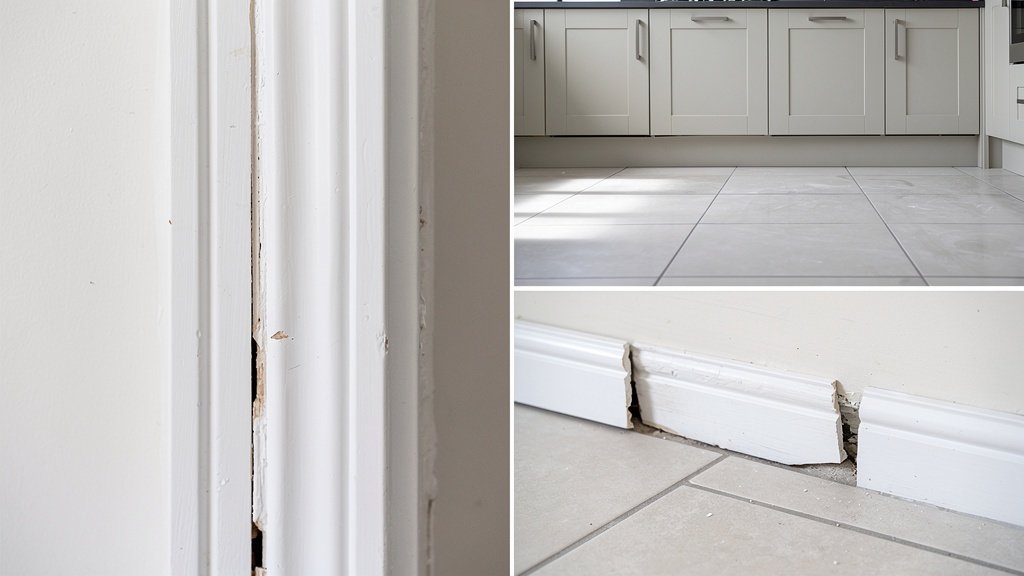
New build properties shrink and move as they dry out — this is completely normal. However, gaps between skirting boards and walls, around door frames, and at ceiling coving junctions are snags your developer must address. Some of these cracks may reappear — but they should seal them before handover regardless.
3. Poorly Fitted Doors and Windows
This is a big one. We frequently find: doors that don't close properly, doors that bounce back open, misaligned hinges causing squeaking, windows that don't open or close smoothly, and poor draught sealing around window frames. Beyond being annoying, poorly fitted external doors and windows can cause energy efficiency and security issues.
4. Plumbing and Water Pressure Issues
Low water pressure, slow drainage, and occasionally visible pipe runs or incorrectly fitted isolation valves are common in new builds. We also look for signs of condensation inside double-glazed units — a manufacturing defect that can cause misting and requires unit replacement.
5. Electrical Defects
While full electrical testing is outside the scope of a snagging survey, we check for visible issues: sockets and switches that aren't flush with the wall or feel loose, missing cover plates, and light fittings that aren't level or properly secured. We also check that all rooms have working lights and sockets.
6. Kitchen and Bathroom Fitting Quality
These are the most visible rooms in any home, and they receive the most scrutiny on a snagging survey. We look for: misaligned cupboard doors and drawer fronts, poor silicon sealing around baths, basins and showers, grouting gaps or inconsistencies in tiling, and worktop joins that aren't flush or properly sealed. In one recent survey in Basingstoke, we found 23 kitchen snags alone.
7. External Brickwork and Render
Moving outside, we check the quality of brickwork and mortar pointing, look for misaligned bricks or excessive mortar runs, and check that any rendered sections are free of cracking or hollow spots. We also check window reveals and the quality of any decorative stonework.
8. Drainage and Guttering
Blocked or incorrectly graded gutters, downpipes that aren't properly connected to the drainage system, and gully covers that haven't been seated properly are common findings. These matter — poor drainage leads to damp penetration and, eventually, serious building problems.
9. Garden and External Works
Uneven paving, poorly laid turf with bare patches, fencing panels that aren't properly fixed or level, and gate ironmongery that doesn't work properly all feature regularly on our snagging lists. The boundary walls and fences are an important legal element — they need to be as specified in your plans.
10. Structural and Building Materials Issues
These are the most serious snags and fortunately the least common — but we do find them. Issues here include: poorly installed loft insulation (both inadequate and improperly laid), thermal bridging at wall connections, and in more serious cases, structural elements that haven't been completed to specification. These go beyond cosmetic and are why a professional snagging survey — rather than your own walk-through — is so valuable.
The Most Important Thing to Know
You have the strongest negotiating position with your developer before you legally complete on the property. We recommend carrying out your snagging survey before the completion date — not after. Once you've legally completed, your leverage reduces significantly.
What Happens After the Snagging Survey?
Once we've completed your snagging survey, we produce a detailed, photographic snagging list. This document is formatted to send directly to your developer or their customer care team. Under the terms of your warranty and the Consumer Code for New Homes, the developer has a defined period to address all defects.
Our clients regularly find that having a professional, itemised snagging list results in significantly more work being carried out than if they'd compiled their own list. Developers take a professional snagging report seriously.
Book a New Build Snagging Survey in Basingstoke
We carry out new home snagging surveys across the whole of Basingstoke, Hampshire and the surrounding area. If you're completing on a new build property and want to make sure every defect is properly documented, get in touch with us today.
For more information about our snagging service, see our new build snagging survey page.