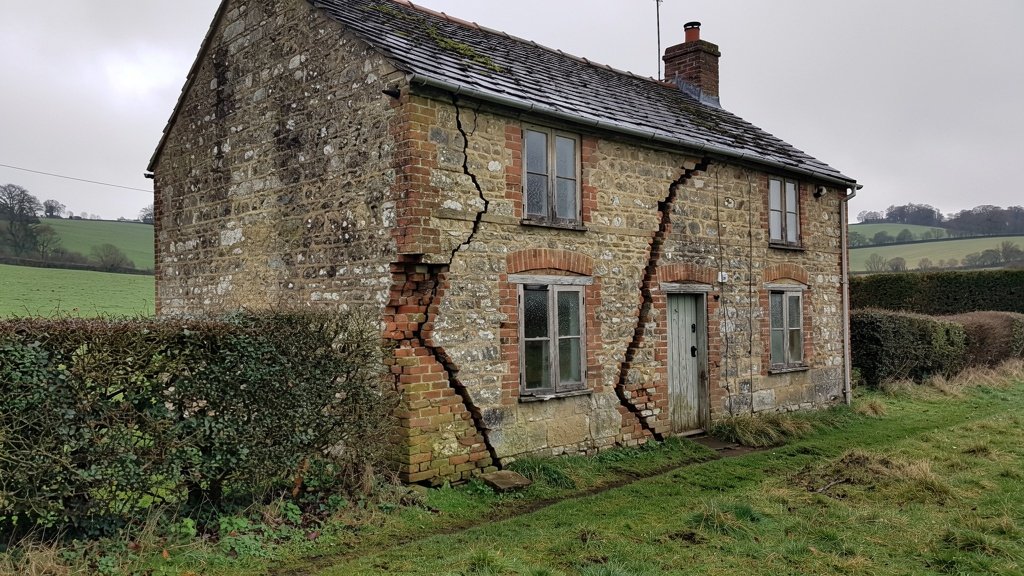
You're viewing a property in Basingstoke. It's perfect in almost every way. Then you notice a crack in the wall. Your heart sinks. Is this serious? Should you walk away? The good news is that most cracks in residential properties are not structural. But some are — and knowing the difference is exactly what we're here for.
As a surveyor, I'm asked about cracks more than almost anything else. And the honest answer is: it depends. Every crack tells a story, and understanding that story requires experience, knowledge, and the right tools. Here's how we assess cracks — and when they become a genuine cause for concern.
The BRE Crack Classification System
We use the Building Research Establishment (BRE) classification system to categorise cracks in masonry properties. It has six categories:
- Category 0 — Hairline cracks less than 0.1mm. Normal settlement, no action needed.
- Category 1 — Fine cracks up to 1mm. Easily filled, decorative treatment only.
- Category 2 — Cracks 1–5mm. Some external repointing may be needed.
- Category 3 — Cracks 5–15mm, or several 3mm cracks. Requires professional investigation and possible structural repair.
- Category 4 — Cracks 15–25mm. Extensive repair including breaking out and rebuilding sections. Structural engineering input required.
- Category 5 — Cracks over 25mm. Serious structural damage requiring major repair. Rare in residential properties.
In practice, Categories 0, 1 and 2 are very common and rarely a cause for concern. It's Categories 3, 4 and 5 where we start to have serious conversations with clients.
Where and How a Crack Runs Matters as Much as Its Width
The pattern, direction and location of a crack tells us a great deal about its cause:
- Horizontal cracks in external walls can indicate lateral pressure from soil — potentially serious, especially in older properties.
- Diagonal cracks radiating from corners of windows and doors are classic subsidence patterns. Diagonal cracks that follow the mortar joints in a stepped pattern are particularly significant.
- Vertical cracks in external masonry often indicate thermal movement or, at expansion joints, normal building movement.
- Cracks wider at the top than the bottom indicate downward movement at one end of the wall (classic subsidence). Cracks wider at the bottom may indicate heave — upward movement, often associated with clay soils and tree roots.
Subsidence: What It Actually Means
Subsidence is one of those words that causes instant panic in buyers — and often for good reason. True subsidence means the ground beneath the building is losing support, causing the foundations to sink and the structure above to crack. The most common causes in Hampshire include:
- Clay shrinkage during dry summers (very common in Hampshire)
- Tree root activity drawing moisture from clay soils
- Leaking drains washing away soil beneath foundations
- Abandoned mine workings (rare in Hampshire)
The key distinction is between active subsidence (still moving) and historic subsidence (movement that has stopped and been repaired). Active subsidence is a serious concern. Historic subsidence — particularly if it's been underpinned and properly treated — may have little practical impact on the property's structural integrity.
Heave: The Opposite Problem
Heave is less well known than subsidence but equally significant. It occurs when soil beneath the foundations expands — most commonly as clay soils absorb water after a period of drought, or following the removal of a large tree whose roots had been drying the soil. Heave causes upward movement, and can be just as damaging as subsidence.
What We Do When We Find Significant Cracks
When I find cracks of concern during a Level 3 building survey, I document them thoroughly with photographs and measurements. I assess whether movement appears active or historic, and check for associated problems — sticking doors, out-of-square frames, and differential settlement.
In cases of significant concern, I'll recommend specialist investigation — typically a structural engineer's report and/or a drain survey to rule out leaking drains as a cause. This gives you, as the buyer, definitive information to work with.
The Bottom Line on Cracks
Most cracks in domestic properties are not structural and require nothing more than standard maintenance. The ones that matter are those that are wide (3mm+), in a diagonal or stepped pattern, and associated with other signs of movement such as sticking doors, sloping floors, or gaps at ceiling junctions. If you're in any doubt about a property you're viewing, commissioning a survey before making an offer is entirely reasonable.
Can You Still Buy a Property With Cracks?
In most cases, yes — even where significant cracks are present. A thorough survey tells you whether the movement is historic or ongoing, what remediation has been done, and what you should do next. Armed with that information, you can negotiate accordingly or proceed with confidence. Many buyers walk away from properties unnecessarily because they didn't have proper survey information.
If you're concerned about a property in Basingstoke or across Hampshire, contact us for a frank conversation before you decide.