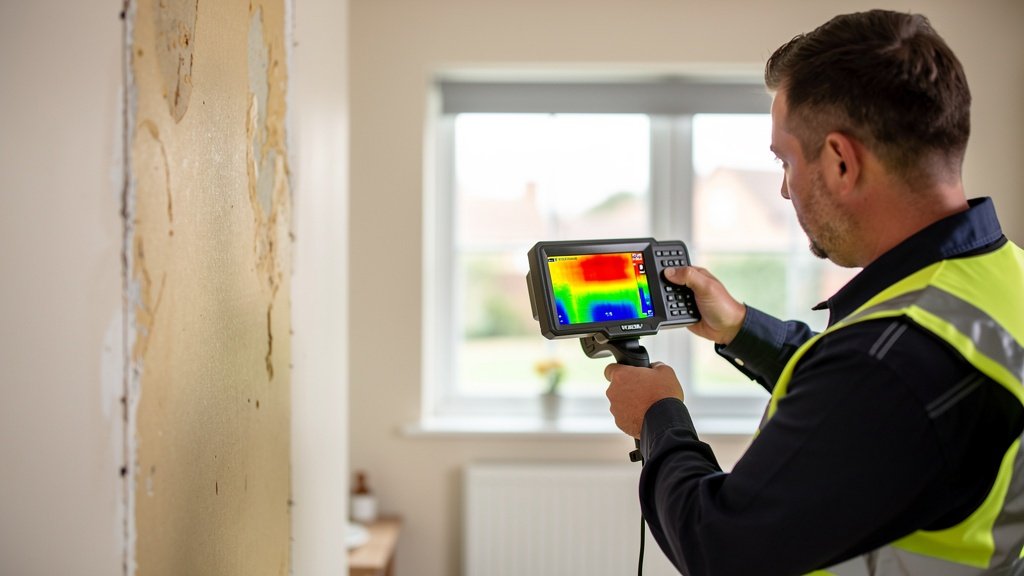
Thermal imaging sounds like something from a spy film. In property surveying, it's something far more practical — a tool that lets us see heat loss, hidden damp, and insulation failures that are completely invisible to the naked eye. Here's how it works and what it means for you when buying a property.
I first started using a thermal imaging camera regularly about six years ago, and it genuinely transformed what I'm able to find during snagging surveys and building inspections. Before thermal imaging, you could identify damp with moisture meters and visual inspection. But thermal imaging takes it to another level — showing you patterns of moisture and heat loss that would otherwise be completely hidden behind plasterboard and paint.
How Thermal Imaging Works
A thermal imaging camera (also called an infrared camera or thermographic camera) detects the heat emitted by surfaces and converts it into a visual image. Warmer areas appear in red/yellow tones, cooler areas in blue/purple. This colour-coded picture of temperature differences reveals:
- Areas where the building envelope is losing heat (cold bridging, missing insulation)
- Wet or damp areas in walls and ceilings (damp surfaces are cooler than dry ones)
- Air leakage paths (where cold air is infiltrating)
- Underfloor heating system layouts (useful in suspected defect investigations)
- Missing cavity wall insulation in cavity construction
When is Thermal Imaging Most Useful?
New Build Snagging Surveys
Thermal imaging is particularly valuable in new build snagging surveys. New builds are supposed to meet demanding energy efficiency standards — but construction defects can undermine that performance significantly. We regularly use thermal imaging to identify:
- Sections where wall insulation hasn't been properly installed
- Thermal bridges at window and door junctions
- Air leakage around service penetrations (pipes, cables entering the building fabric)
- Early signs of moisture in building materials before they're visible to the eye
Developers have a legal obligation to build to the specified energy performance standard. Thermal imaging gives you the evidence to hold them to it.
Older Property Surveys
In older properties, thermal imaging can reveal:
- Blocked or absent cavity wall insulation (particularly relevant when cavity fill was injected retrospectively and may have settled or degraded)
- Cold bridge penetrations through walls (steel lintels, concrete frame members) that increase heat loss and risk of interstitial condensation
- Early signs of damp penetration behind newly decorated surfaces — a significant issue where vendors have freshly decorated to mask problems
Important Limitations
Thermal imaging is a valuable tool, but it has limitations that any responsible surveyor must acknowledge:
- Temperature differential required — For reliable results, there needs to be a meaningful temperature difference between inside and outside (typically at least 10°C). Thermal imaging is most reliable in winter and less useful in summer.
- Not the same as damp detection — A cool spot on a thermal image is not automatically damp. It needs to be correlated with moisture readings and visual inspection.
- Access limitations — We can only scan accessible surfaces. Areas hidden behind furniture or fitted storage cannot be assessed.
Thermal Imaging for Energy Efficiency
Beyond identifying defects, thermal imaging gives you a picture of a property's energy performance. With energy costs remaining high, understanding where a property is losing heat — and how cost-effectively those losses can be reduced — is genuinely valuable information when making a purchase decision.
A property with cold bridges, missing insulation or air leakage paths will be more expensive to heat. Quantifying this in a survey can give you grounds to negotiate on price or request remediation before completion.
Get a Survey With Thermal Imaging in Basingstoke
We use thermal imaging as part of our comprehensive building surveys and snagging surveys across Basingstoke and Hampshire. Contact us to find out more about what we include in our surveys. For information on our full range of services, see our surveying services page.